Understanding Town Gratitude Mechanics
Town gratitude functions as your overarching civic reputation meter in Graveyard Keeper 2. Unlike simple currency, gratitude reflects the trust and dependence the villagers place upon your management of the local cemetery and spiritual health.
Earning gratitude points unlocks higher commercial tiers with local merchants, lowers purchase tariffs on imported goods, and opens locked dialogue trees with prominent civic figures such as the Inquisitor, the Bishop, and the Merchant.
Gratitude is primarily earned by completing bulletin board work orders, supplying the tavern with fresh vegetables and wine, and consistently upholding weekly ceremonial standards during church services.
Church Sermons and Gratitude Synergy
Your weekly church sermon on Wrath Day acts as the primary multiplier for community gratitude. Delivering an inspiring sermon not only rewards you with raw faith points and donation coins but also bestows substantial gratitude bonuses across the entire settlement.
To maximize sermon gratitude, prioritize crafting high-quality combo prayers and blessing prayers at the church writing desk. The success chance of these advanced prayers depends on meeting the indoor decor rating of your sanctuary.
If your sanctuary score meets or exceeds the prayer requirement, the congregation departs feeling enlightened, boosting their town gratitude and increasing the frequency of valuable trade contracts offered throughout the following week.
Vendor Reputation and Civic Milestones
As town gratitude crosses major numeric thresholds, the physical town itself evolves. Stalls upgrade their visual appearances, craftsmen expand their offered inventories to include rare seeds and advanced metallurgy tools, and new transport routes open up.
High gratitude also unlocks lucrative weekly trade crates. Delivering packaged agricultural produce and polished marble to the Merchant on his designated visiting day converts accumulated gratitude directly into substantial silver and gold coinage.
Neglecting town requests or failing to maintain the cemetery can stall your civic tier progression. Treat town gratitude as an active investment that pays ongoing economic dividends throughout your campaign.
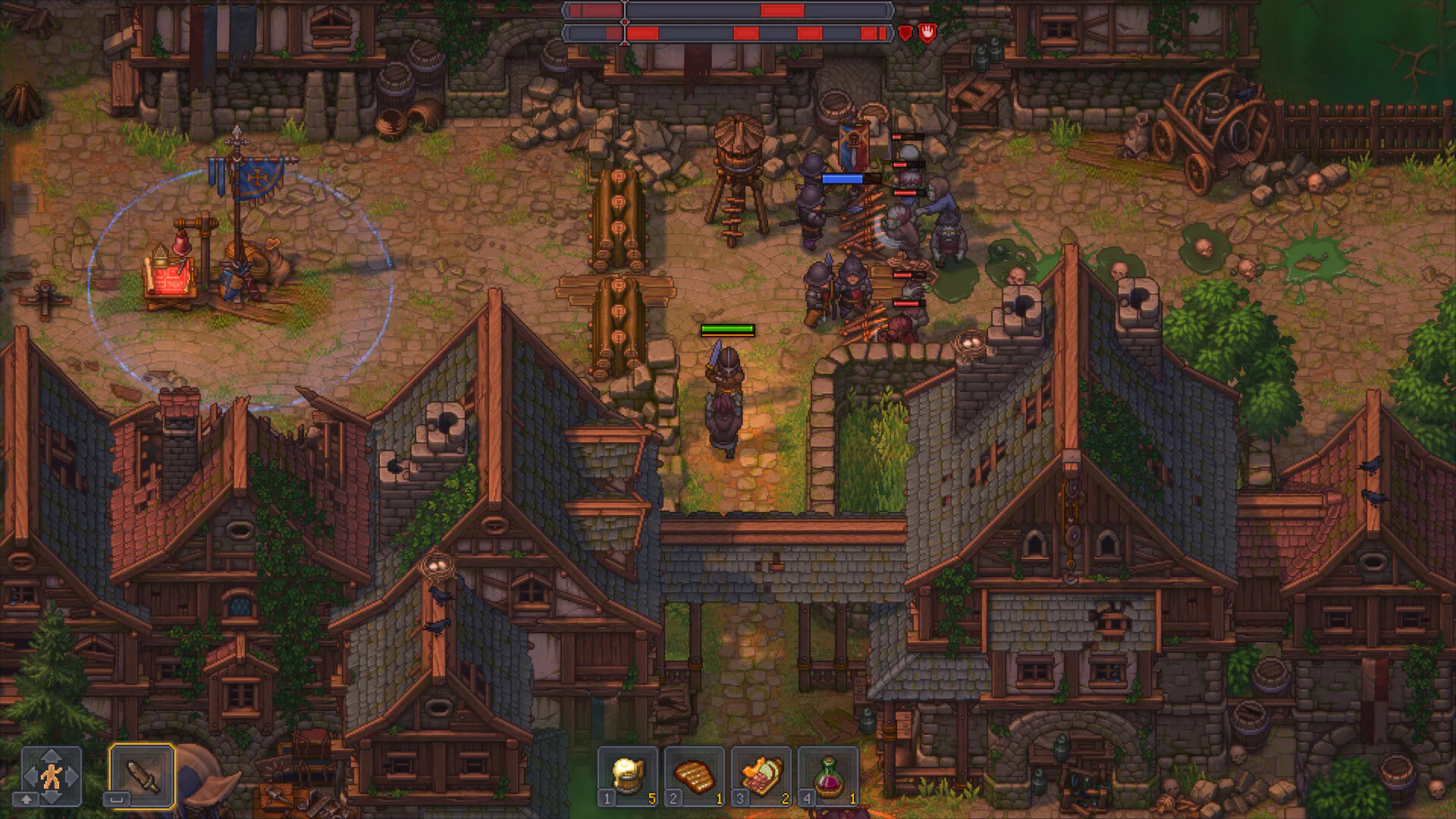
Rebuilding the ruined settlement requires sequencing reconstruction by economic priority. Rebuild the Blacksmith & Carpentry Forge first (Phase 1) to unlock tool crafting, followed by the Agricultural Commons and Flour Mill (Phase 2) to maintain food and donkey logistics. Reopening The Dead Horse Tavern (Phase 3) and Trade Stalls (Phase 4) establishes a self-sustaining silver revenue loop, culminating in the Town Hall (Phase 5) for daily municipal tax collection.
Graveyard Keeper 2: Complete Town Restoration & Civic Tax Guide
tinyBuildGAMES • 330K+ views
🎯 Key Takeaways & Strategy
- Never attempt to rebuild the Town Hall early; it demands 40 Marble Blocks and expensive Royal Stamps.
- Rebuilding the tavern unlocks the town Teleportstone waypoint, saving hours of transit.
- Stockpile carrots immediately upon repairing the Flour Mill to guarantee uninterrupted corpse delivery.
🏘️ Town Rebuilding Blueprint & Step-by-Step Restoration
Rebuild the devastated settlement in the optimal sequence: unlock workshops, establish supply chains, and collect daily resident taxes.
Blacksmith & Carpentry Quarter
Phase 1: EssentialTool Forging & Material Processing Core
- Unlocks Krezvold's Tier II forge recipes and steel tool metallurgy.
- Allows crafting advanced wheelbarrows and lumber transport carts.
- Reduces tool repair costs at local anvil stations by 40%.
Sermon Faith & Gratitude Forecaster
Optimize your Pride Day sermon output by calculating sanctuary decor synergy, incense boosts, and town gratitude returns.
Parish Sanctuary (Tier II)
Requires carved stone wall candelabras, church confessionals, and incense braziers.