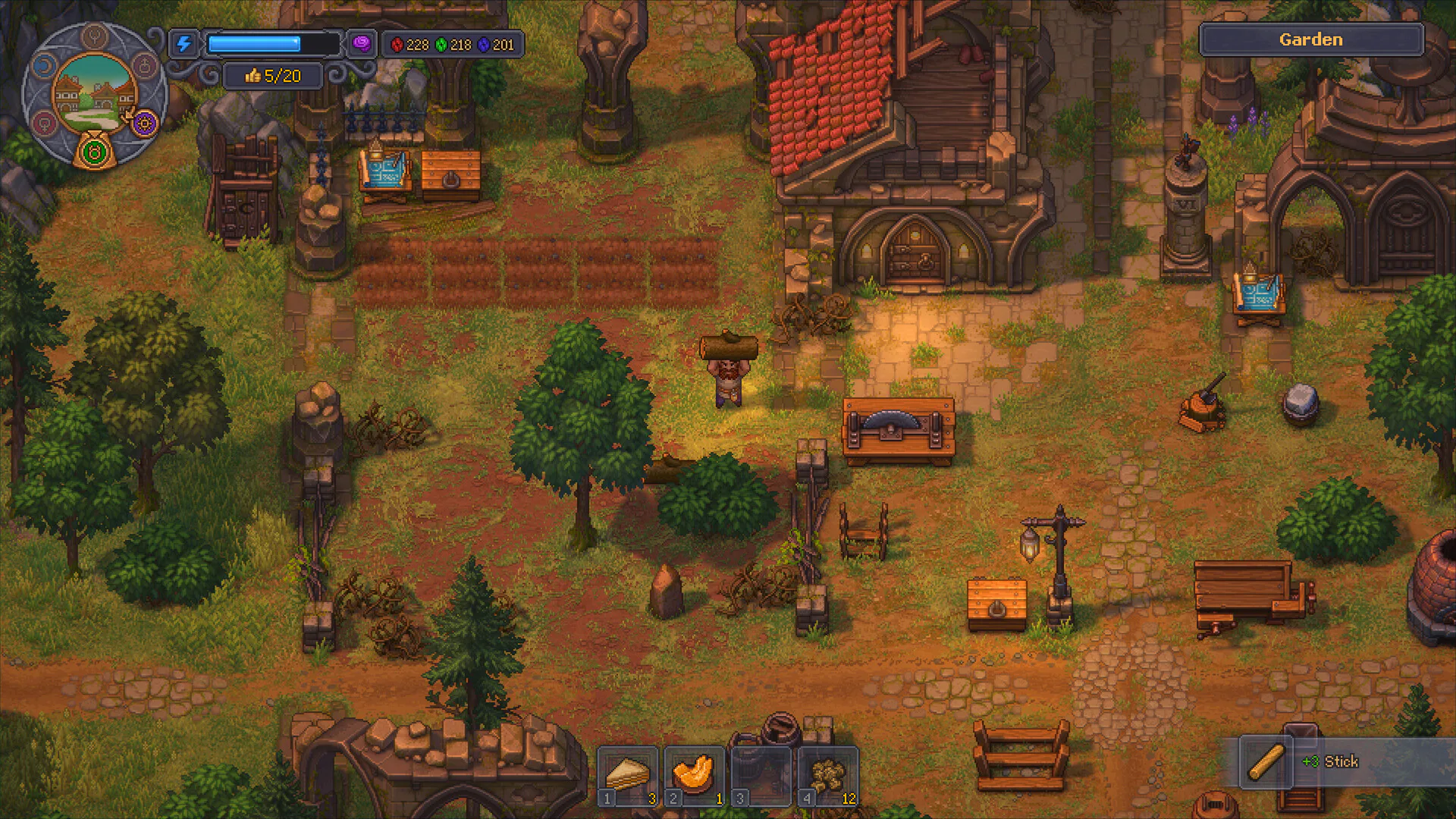
Core Mechanics and Establishing Your Daily Routine
Stepping into Graveyard Keeper 2 requires balancing physical energy, sanity management, and weekly civic obligations. Every in-game day follows an astronomical calendar marked by six distinct planetary days. Establishing a structured daily routine early prevents common bottlenecks like running out of stamina before processing fresh cadavers or missing scheduled vendor interactions.
Your immediate focus in the first week should revolve around unlocking basic tool repair kits, clearing the pathway debris between your cottage and the cemetery, and securing an initial stockpile of firewood. Do not rush to accept every villager quest immediately; prioritize tasks that expand your crafting benches and grant blue technology points, which unlock the theology and anatomy tech trees.
Pay close attention to your energy consumption when chopping trees or clearing overgrown gravestones. Resting in bed not only saves your game progress but also replenishes health and clears mild exhaustion debuffs. Combining regular sleep cycles with simple cooked meals like baked apples ensures you never waste daylight hours recovering from avoidable exhaustion.
Cemetery Rating and Optimizing Weekly Sermons
The cemetery quality rating directly dictates your standing with the local church and the size of your weekly congregation. Every grave plot contributes positively or negatively based on the corpse buried beneath and the quality of the headstone and grave fence installed. Buried cadavers with high red skull counts will drag down the entire graveyard rating until rectified.
On Wrath Day, the weekly church sermon takes place. Delivering an effective sermon generates vital faith tokens and substantial donation copper coins. Faith is the cornerstone currency required for advanced crafting, research table analyses, and awakening zombie workers. Delivering even a basic prayer every week provides the initial pool of faith needed to unlock advanced laboratory workstations.
To systematically improve your cemetery rating, replace cracked wooden markers with polished stone crosses and stone grave borders as soon as the stonecutter bench is operational. Keep several spare repair kits in your yard chest so newly uncovered historical plots can be refurbished without backtracking to the cottage.
Corpse Processing and Autopsy Strategy
Whenever the delivery bell chimes, prompt autopsy is paramount before corpse freshness drops below ninety percent. Decaying bodies lose white skulls and accumulate additional red skulls, lowering their maximum potential graveyard score. Prepare your morgue by constructing clean autopsy tables and refrigerated body racks as soon as iron parts become available.
Strategic organ extraction is the key to creating pristine bodies. Removing blood and fat reliably converts red skulls into desirable white skulls while yielding valuable alchemical ingredients. Be cautious when extracting internal organs such as the heart, intestines, or brain, as erratic surgical rolls can inadvertently damage the body if relevant surgical perks are still locked.
If a delivery arrives with too many unfixable red skulls or extensive decay, do not bury it in your primary graveyard plots. Divert these low-grade remains directly to the cremation pyre or preserve them for transformation into mindless industrial zombie laborers once automated reanimation is unlocked.
Town Expansion and the Transition to Automation
Beyond the cemetery fences, building strong relations with town merchants unlocks essential trade routes and structural blueprints. Completing delivery orders for the tavern keeper, blacksmith, and apothecary earns town gratitude points, raising commercial tiers and lowering vendor purchase prices across the board.
As your technological capabilities expand, labor bottlenecks will shift from energy limitations to logistical transit times. This makes unlocking zombie automation via the basement Plague Doctor questline your mid-game inflection point. Stationing resurrected helpers at the northern quarry and lumber camp ensures a constant influx of raw materials while you focus on high-tier theology and complex alchemy.
Graveyard Keeper 2 revolves around a strict 6-day astronomical calendar. Weekly sermons on Pride Day (Sunday) remain your primary regular source of vital Faith tokens. Spend your first week clearing the cottage yard, trading with the Blacksmith for a whetstone, bribing the Donkey with carrots to maintain corpse delivery, and awakening your first automated logger.

Graveyard Keeper 2: Official Launch Systems & Complete Beginner Overview
tinyBuildGAMES • 300K+ views
🎯 Key Takeaways & Strategy
- Replenish energy with baked apples and bread during the day; avoid burning daylight walking home to sleep.
- Never bury poor-quality corpses with 3+ red skulls early on; cremate them for burial certificates instead.
- Never skip weekly Merchant and Astrologer visits; fulfill trade orders for silver coins and blue tech point books.
📅 6-Day Planetary Calendar & Progression Tracker
The world operates on a strict 6-day astronomical cycle. Select any day to view active NPC visitors, trade milestones, and sermon obligations.
- 1Conduct your weekly church service before sunset to harvest essential Faith tokens.
- 2Deliver higher-tier prayers (Combo Prayer, Blessing Prayer) once sanctuary decor reaches requirements.
- 3Supply the Bishop with requested ceramic bowls and high-grade fish to raise church reputation.